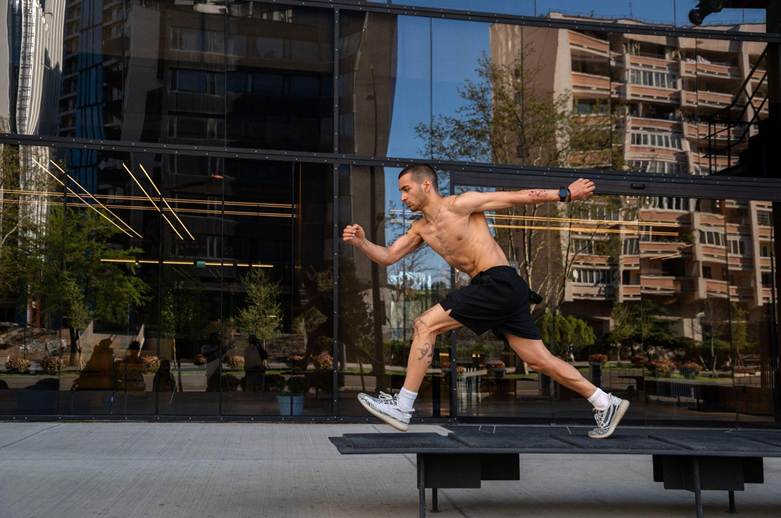
In conversations around endurance performance, Kevin Morgan of Pittsford NY, often highlights that efficient movement is not built through mileage alone. Plyometric training, explosive, high-intensity movements like jumping and bounding, plays a critical role in improving running economy, resilience, and long-term durability.
This perspective challenges a common assumption.
Endurance is not just about how long the body can sustain effort. It is also about how efficiently that effort is produced.
Plyometrics directly influence that efficiency.
What Plyometrics Actually Do for Endurance Athletes
Plyometric exercises focus on rapid force production and elastic energy return.
They train the body to:
- Generate power quickly
- Absorb impact efficiently
- Transition between movements with minimal energy loss
For runners, this translates into improved stride mechanics.
Instead of relying purely on muscular effort, the body begins to use stored elastic energy within tendons and connective tissue.
This reduces overall energy expenditure during sustained activity.
Running Economy: The Hidden Performance Multiplier
Running economy refers to how much energy is required to maintain a given pace.
Two athletes with similar fitness levels can perform very differently based on efficiency.
Plyometric training improves running economy by:
- Increasing stiffness in the lower leg, allowing better energy return
- Reducing ground contact time during each stride
- Enhancing neuromuscular coordination
These changes allow athletes to cover the same distance with less effort.
Over long distances, even small efficiency gains create significant performance differences.
Why Endurance Training Alone Is Not Enough
Traditional endurance training emphasizes volume and aerobic capacity.
While essential, it often neglects:
- Explosive strength
- Reactive control
- Impact absorption
Without these components:
- Stride efficiency plateaus
- Fatigue leads to mechanical breakdown
- Injury risk increases over time
Plyometrics addresses these gaps by training the body to handle force, not just sustain movement.
The Elastic System: How the Body Stores and Releases Energy
The body’s tendons and connective tissues function like springs.
During running:
- Energy is stored when the foot strikes the ground
- That energy is released as the body propels forward
Plyometric exercises enhance this system.
They improve the ability to:
- Store more energy during impact
- Release it quickly and efficiently
- Minimize energy loss through excessive movement
This creates smoother, more efficient motion with less muscular strain.
Common Plyometric Movements for Endurance Athletes
Plyometric training does not require complex equipment. It focuses on controlled, explosive movement patterns.
Key exercises include:
- Box jumps – develop vertical power and landing control
- Bounding drills – improve stride length and coordination
- Jump lunges – enhance unilateral strength and balance
- Hops and skips – reinforce rhythm and reactive movement
These exercises are typically integrated into short sessions rather than long workouts.
Quality matters more than volume.
Injury Resilience Through Impact Training
One of the most overlooked benefits of plyometrics is injury prevention.
By exposing the body to controlled impact, it becomes more resilient.
Adaptations include:
- Stronger tendons and ligaments
- Improved joint stability
- Better shock absorption during movement
Without this adaptation, repetitive endurance activity can create cumulative stress.
Plyometrics prepare the body to handle that stress more effectively.
The Role of Neuromuscular Coordination
Endurance performance is not purely cardiovascular. It also depends on how efficiently the nervous system coordinates movement.
Plyometric training enhances:
- Timing between muscle activation and relaxation
- Precision in movement patterns
- Communication between the brain and the body
This results in smoother, more controlled motion.
As coordination improves, unnecessary energy expenditure decreases.
Fatigue Resistance Through Mechanical Efficiency
Fatigue is not only a result of energy depletion. It is also influenced by how efficiently movement is maintained over time.
As fatigue sets in:
- Stride mechanics often deteriorate
- Ground contact time increases
- Energy loss becomes more pronounced
Plyometric training helps delay this breakdown.
By reinforcing efficient movement patterns, the body maintains form longer under stress.
How to Integrate Plyometrics Without Overload
Plyometrics must be introduced carefully within an endurance program.
Key principles include:
- Low volume, high quality – focus on precision rather than repetition
- Adequate recovery – allow time for connective tissue adaptation
- Progressive intensity – begin with basic movements before advancing
Integration might look like:
- Short plyometric sessions 1–2 times per week
- Placement after warm-ups or before light runs
- Avoiding high-intensity plyometrics during peak fatigue
This ensures benefits without increasing injury risk.
Balancing Strength, Endurance, and Power
Optimal endurance performance requires balance.
- Aerobic capacity supports duration
- Strength supports stability
- Power supports efficiency
Plyometrics sit at the intersection of strength and power.
They bridge the gap between raw endurance and refined movement.
Without this bridge, performance improvements can plateau despite increased training volume.
Why Small Efficiency Gains Matter Over Long Distances
Endurance events amplify small differences.
A slight improvement in efficiency can result in:
- Lower cumulative fatigue
- More consistent pacing
- Greater finishing strength
Over time, these marginal gains compound.
What begins as a minor adjustment in movement becomes a significant advantage in performance.
Final Reflection: Power Within Endurance
Endurance is often associated with steady effort and long duration. However, beneath that consistency lies a need for controlled power and efficient movement.
Plyometric training introduces that dimension.
It transforms how force is produced, absorbed, and reused.
- Movement becomes lighter
- Energy use becomes more efficient
- The body becomes more resilient under stress
In this way, endurance is not just extended; it is refined. And that refinement is what allows performance to evolve beyond limits defined by distance alone.
